There are farewells in football that feel inevitable, and then there are those that feel seismic. Mohamed Salah’s announcement that he will leave Liverpool at the end of the 2025–26 season belongs firmly in the latter category.
After nine years at Anfield, Salah is not just departing a football club; he is closing a chapter that redefined Liverpool’s modern identity and reshaped what supporters came to expect from a winger in the Premier League.
Salah leaves as one of the most decorated and productive players in Liverpool’s history. His numbers alone make the case: 255 goals in 435 appearances, multiple Golden Boots, two Premier League titles, and a Champions League medal, among a haul of major trophies that restored Liverpool to Europe’s elite. But statistics only tell part of the story. Salah became a symbol of Liverpool’s resurgence, the sharp edge of Jürgen Klopp’s gegenpressing machine and the constant outlet when chaos was required.
Yet even legends reach a natural endpoint. Salah’s departure, agreed a year before his contract expiry, reflects not decline so much as closure. Liverpool, the club that once struggled to let go of ageing stars, now face a different challenge: how to move on from a player who, as Klopp himself has admitted, is essentially “irreplaceable”.
Klopp’s Warning: Don’t Chase the Ghost of Salah
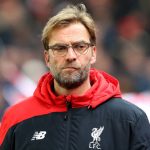
If there is one voice Liverpool would be wise to heed, it is Jürgen Klopp’s. Since Salah confirmed his exit, the former Liverpool manager has been unequivocal: replacing Salah like-for-like is a fool’s errand.
Klopp has described Salah as a unique footballer whose output from a wide position may never be replicated, arguing that Liverpool should resist the temptation to “chase the shadows” of what has been lost.
This is not false modesty or nostalgia. Klopp understands that Salah was not merely a right winger but an attacking system unto himself. He scored like a striker, created like a playmaker, and terrified defenders in ways that distorted entire defensive structures. Trying to find “the next Salah” risks setting up any successor for failure before they have even kicked a ball.
Instead, Klopp’s advice is more philosophical: evolve. Liverpool have lost transformative figures before—Sadio Mané, Roberto Firmino, Georginio Wijnaldum—and survived by reshaping the collective rather than anointing a single saviour. Salah’s exit should be viewed through the same lens, even if the emotional weight feels heavier this time.
Yan Diomande: Potential Over Perfection
That context matters when examining the names now linked with Liverpool. Chief among them is RB Leipzig’s 19-year-old winger Yan Diomande, widely reported as one of Liverpool’s preferred options as they prepare for life after Salah. Diomande’s rise has been rapid, his dribbling numbers eye-catching, and his directness reminiscent—at least stylistically—of Salah’s early years in red.
But Diomande is not being targeted to be Salah. He is being targeted to become something else. At 19, his appeal lies in ceiling rather than certainty. Reports suggest Leipzig would demand close to €100 million, a fee that underlines both his promise and the risk involved. Liverpool’s interest fits their broader recruitment logic: buy young, elite-potential attackers and develop them within a defined tactical structure.
The danger, of course, is expectation. Diomande will arrive—if he arrives—under the shadow of the Egyptian King. Every missed chance will be compared, every quiet performance magnified. Liverpool’s job is not just to sign the right player, but to protect him from the impossible burden of immediate legacy.
Francisco Conceição: A Different Kind of Successor
Alongside Diomande, Liverpool have also been linked with Juventus winger Francisco Conceição, a very different profile and a telling contrast. Where Diomande offers raw explosiveness, Conceição offers technique, intelligence, and versatility. He has publicly downplayed speculation, stressing his focus on Juventus, but reports consistently place him on Liverpool’s shortlist.
Conceição’s numbers are modest compared to Salah’s, and even compared to Diomande’s breakout season. That may be precisely the point. Signing Conceição would signal a move away from Salah-as-supernova toward a more distributed attacking model, where creativity and responsibility are shared across the front line.
Such a shift would align neatly with Klopp’s warning. Rather than forcing one player to carry the crown, Liverpool could construct an attack where Salah’s absence is felt everywhere—but owned by no one individual.
The Legacy Liverpool Must Protect
Ultimately, moving on from Mohamed Salah is not about replacing goals. It is about protecting identity. Salah’s greatest contribution may not have been his goals or trophies, but the standards he set. Relentless availability. Relentless output. Relentless ambition. Those are the traits Liverpool must preserve, even as the face of the attack changes.
Salah’s farewell will be emotional, deservedly so. He leaves as one of Liverpool’s greatest modern players, his legacy secure and his place in Anfield history untouchable. But Liverpool cannot afford sentimentality to harden into paralysis. Football moves quickly, and clubs that fail to adapt are punished.
In that sense, Salah’s departure is not just an ending. It is a test. Of recruitment. Of patience. Of philosophy. If Liverpool heed Klopp’s advice, resist the urge to chase ghosts, and commit to evolution rather than imitation, they may discover that the post-Salah era is not a decline—but a transformation.
The Egyptian King is leaving the throne. What matters now is not who wears his crown, but whether Liverpool remember how they built the kingdom in the first place.
- Soccer News Like
- Be the first of your friends!