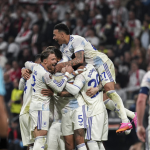
Aston Villa have won the Europa League, beating SC Freiburg in the final played in Istanbul on Wednesday.
Unai Emery and the Art of European Mastery
There are certain competitions that, over time, come to define individuals. For Unai Emery, the Europa League has become precisely that: not merely a tournament he excels in, but one he has come to dominate, interpret, and ultimately master. The 2025–26 campaign provided the latest and perhaps most compelling chapter in that story.
Guiding Aston Villa to victory in Istanbul, Emery secured his fifth Europa League title, extending a record that already stood apart in modern football. The 3–0 dismantling of Freiburg in the final was not just a triumph of quality but of preparation, adaptability, and clarity of vision. His teams have always reflected a particular European intelligence—disciplined without being restrictive, reactive yet decisive, capable of altering tempo and shape with minimal disruption.
What made this victory notable, however, was not simply another medal in an already crowded cabinet. It was the context. Aston Villa are not Sevilla, Villarreal, or Paris Saint-Germain. When Emery arrived in 2022, the club were still establishing themselves after years of instability. Yet within a remarkably short span, he has transformed them into a side not only capable of competing in Europe, but of winning it convincingly.
This raises the inevitable question: is Emery once again ready for a club where expectations extend beyond success in a single competition? His previous experiences at Arsenal and PSG were defined as much by their pressures as by their achievements. Now, armed with the credibility of sustained success and the subtle authority that comes from repeated continental triumphs, he may be better equipped than ever to revisit that level. Or perhaps, more intriguingly, he is redefining what that level should mean—bringing a club like Aston Villa to the top rather than returning to an established giant.
Aston Villa’s Historic Triumph
For Aston Villa, the significance of this victory cannot be overstated. A 30-year wait for a major trophy ended in emphatic fashion, and their first European triumph since 1982 added a layer of historical resonance to the achievement.
The final itself was surprisingly one-sided. Freiburg, spirited and ambitious, struggled to cope with Villa’s control of the midfield and precision in the final third. Goals from Youri Tielemans, Emiliano Buendía, and Morgan Rogers sealed a 3–0 victory that reflected the balance of play. Villa were composed, patient, and ruthless when the moment required it.
Yet the road to Istanbul was just as telling. Villa entered the competition among the favorites and justified that perception at every stage, navigating the knockout rounds with authority and dispatching strong opposition en route to the final. Their campaign combined depth with resilience, suggesting a team comfortable with expectation rather than burdened by it.
Perhaps most striking was the sense of inevitability surrounding their success. This did not feel like a surprise winner in Europe’s second competition; it felt like the natural outcome of a carefully constructed project reaching maturity.
Freiburg’s Journey: Courage in Defeat
If Aston Villa embodied fulfillment, SC Freiburg represented aspiration. Their journey to the final was historic—their first appearance in a major European showpiece—and it carried with it the enthusiasm of a club unaccustomed to such stages.
Freiburg’s campaign was built on cohesion, intelligent pressing, and a fearless attacking outlook. They navigated difficult knockout ties, including a dramatic semi-final victory over Braga, to reach Istanbul. Along the way, they demonstrated that collective structure and tactical clarity can bridge the financial and reputational gaps that often define European competition.
In the final, however, they encountered the limits of that approach. Villa’s superior quality and experience proved decisive, particularly in the key moments before halftime when the match effectively slipped away.
Yet defeat should not obscure achievement. Freiburg’s run serves as a reminder that the Europa League still retains space for stories beyond the traditional elite—a competition where emerging clubs can dream, and occasionally, thrive. Even in defeat, they enhanced their reputation and suggested that their presence at this level may not be a one-off.
A Wider Context: The Premier League Ascendant
Beyond the narratives of victory and defeat lies a broader pattern that has come to define the 2025–26 European season: the unmistakable dominance of the Premier League.
Aston Villa’s Europa League success is just one part of a larger picture. Arsenal have reached the Champions League final, while Crystal Palace are set to compete in the Europa Conference League final—an unprecedented alignment that places English clubs at the center of all three major UEFA competitions.
This is more than coincidence. It reflects structural advantages that have accumulated over time: financial power, squad depth, global recruitment networks, and the presence of elite coaching talent across multiple clubs. The result is a league that not only produces one or two dominant teams, but a broad spectrum of sides capable of competing—and winning—at the highest level.
Should all three clubs complete the sweep, it would mark a historic moment in European football, echoing past eras of national dominance while surpassing them in the modern, multi-competition landscape.
Is Dominance Good for the Game?
And yet, this raises an uncomfortable but necessary question: is such concentration of power healthy for the sport?
On one hand, the Premier League’s dominance brings undeniable benefits. The quality of football is elevated, the global audience expands, and the competitive standard within the league itself remains extraordinarily high. Neutral fans are drawn to the drama, the talent, and the depth on display.
On the other hand, there is a risk inherent in imbalance. European competition has long thrived on diversity—of styles, cultures, and competitive structures. When one league begins to monopolize success, that diversity can erode. The unpredictability that defines knockout football may give way to financial determinism, where resources increasingly dictate outcomes.
The contrasting stories of Aston Villa and Freiburg encapsulate this tension. Villa’s triumph represents the strength and ambition of English football, but Freiburg’s defeat underscores the challenges faced by clubs operating outside that ecosystem.
Ultimately, the 2025–26 Europa League season leaves us with a dual narrative. It celebrates excellence—Emery’s brilliance, Villa’s resurgence, and the Premier League’s collective power—while also prompting reflection on what European football should aspire to be.
For now, the balance tilts firmly toward England. Whether that balance endures, or begins to shift once more, will define not just the next Europa League season, but the future shape of the European game itself.
- Soccer News Like
- Be the first of your friends!