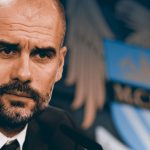
When Pep Guardiola arrived at Manchester City in 2016, he brought with him not just a reputation, but a philosophy. English football had long admired tactical sophistication, but it had rarely been reshaped so decisively by a single figure.
Over the next decade, Guardiola would not only deliver unprecedented success but alter the very fabric of the Premier League itself. His time at City stands as one of the most transformative managerial reigns in football history — defined by dominance, innovation, and a rivalry that elevated the entire sport.
Building a Machine: Guardiola’s City Revolution
Guardiola inherited a club already rich in resources and ambition, but far from complete in identity. What followed was not merely a period of success; it was a reconstruction. Manchester City became, in many ways, a laboratory of footballing ideas — a place where Guardiola refined positional play, demanded technical perfection, and insisted on total control of the game.
The results were immediate and historic. In the 2017–18 season, City became the first Premier League team to reach 100 points, scoring 106 goals in a campaign that redefined what dominance looked like in English football. Over the next decade, they accumulated trophies at an astonishing rate — six league titles and a total of 20 major honors, including the club’s first Champions League triumph in 2023.
But numbers alone do not capture the scale of Guardiola’s influence. His teams did not just win; they controlled. Matches became exercises in territorial dominance, with City suffocating opponents through possession, pressing, and positional discipline.
More importantly, Guardiola changed what was expected in English football. Ball-playing goalkeepers, inverted full-backs, midfielders dropping into defensive lines — these ideas spread rapidly across the league. The Premier League did not just become more competitive; it became more sophisticated.
Sustained Excellence in a Ruthless Environment
The most remarkable aspect of Guardiola’s tenure was not the brilliance of a single season, but the consistency of excellence. City dominated not through occasional brilliance but relentless superiority, finishing outside the top two only rarely and often accumulating points totals that shattered traditional benchmarks.
In an era when competition at the top of the Premier League intensified, Guardiola’s City set a standard that forced every rival to improve. Title-winning campaigns were no longer about reaching 85 points; they demanded near perfection. Seasons in which teams surpassed 90 points — once considered exceptional — became almost routine during City’s peak years.
This sustained dominance marked a shift in the league’s competitive landscape. Manchester City were no longer challengers; they were the reference point. Every team, from title contenders to mid-table sides, had to measure themselves against Guardiola’s blueprint.
Klopp’s Liverpool: The Perfect Antagonist
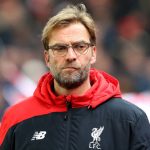
Yet Guardiola’s legacy cannot be understood in isolation. It was shaped, refined, and ultimately enhanced by the presence of a singular rival: Jürgen Klopp.
In Klopp’s Liverpool, Guardiola found not just opposition, but resistance of the highest order. The German’s philosophy — built on intensity, pressing, and emotional energy — contrasted sharply with Guardiola’s meticulous control.
What followed was a rivalry that transcended typical sporting competition. For nearly a decade, Manchester City and Liverpool pushed each other to extraordinary heights, creating title races of relentless intensity.
The 2018–19 season remains the clearest example. City amassed 98 points, Liverpool 97 — one of the highest combined tallies in football history, with the title decided by the finest of margins. A year later, Liverpool responded by winning the title with 99 points of their own, 18 more City in second place.
These were not normal title races; they were marathons run at sprinting pace.
Crucially, this rivalry was defined by respect rather than hostility. Unlike previous eras of Premier League management, the Guardiola-Klopp duel was driven not by mind games but by mutual admiration and a shared pursuit of excellence.
A Rivalry That Elevated the League
The impact of Guardiola’s rivalry with Klopp extended far beyond Manchester City and Liverpool. It reshaped the Premier League’s identity.
For years, their teams represented two poles of elite football — control versus chaos, possession versus pressing. But over time, these ideas converged. Guardiola adapted, introducing more direct elements into his game, while Klopp’s Liverpool incorporated greater control and patience.
This tactical evolution, driven by competition at the highest level, raised the standard across the league. Other teams were forced to innovate or risk being left behind. The Premier League became not just the wealthiest league in the world, but arguably the most tactically advanced.
Their matches, meanwhile, became defining events of the football calendar — high-speed, high-quality encounters that combined technical brilliance with emotional intensity.
It is no exaggeration to say that Guardiola and Klopp created an era. Together, they transformed Manchester City and Liverpool into the two defining teams of modern English football.
Legacy Beyond Silverware
As Guardiola’s time at Manchester City comes to an end, his legacy is secure not just in trophies, but in transformation.
He took a successful club and turned it into a footballing institution — one defined by a clear identity and sustained excellence. He changed how the game is played, coached, and even understood within English football.
Perhaps most importantly, he helped deliver a golden era of the Premier League. His rivalry with Klopp elevated the competition to new heights, producing matches, seasons, and narratives that will endure long after both managers have departed.
Conclusion: The End of an Era
Pep Guardiola’s Manchester City will be remembered as more than a dominant team. It will be remembered as a cultural shift — a period in which English football was pushed to levels of technical and competitive excellence rarely seen before.
And at the heart of that story lies a paradox: his greatest achievement may not be his trophies, but the opposition he inspired. Without Klopp, Guardiola’s reign might have been less dramatic. Without Guardiola, Klopp’s Liverpool might have been more decorated. And yet, it could just be that without one, the other wouldn’t have reached anywhere near those heights, brilliant though each of them is.
Thankfully, we’ll never know.
Together, they created something rare in sport — a rivalry that did not diminish either side, but instead elevated both. In doing so, they left the Premier League richer, deeper, and permanently changed.
- Soccer News Like
- Be the first of your friends!