Under the Roman lights of the Stadio Olimpico on Wednesday, the Coppa Italia final between Inter Milan and Lazio unfolded not as a classic of tension and reversals, but as a study in authority, control and inevitability.
In a season already leaning heavily in their favor, Inter arrived in Rome with the confidence of Serie A champions and departed with silverware secured, sealing a 2–0 victory that confirmed a domestic double of considerable prestige.
Lineups and Key Absences
Both sides approached the final with clear priorities and notable limitations. Lazio, set up in a 4-3-3, relied on Edoardo Motta in goal, with a back line of Adam Marušić, Mario Gila, Alessio Romagnoli and Nuno Tavares. Their midfield trio of Toma Bašić, Patric and Kenneth Taylor supported an attacking line featuring Gustav Isaksen, Tijjani Noslin and Mattia Zaccagni, who returned to fitness in time for the final.
Inter deployed their familiar 3-5-2, with Josep Martínez between the posts and a defense of Yann Bisseck, Manuel Akanji and Alessandro Bastoni. The midfield, anchored by Nicolò Barella, Piotr Zieliński and Petar Sučić, was flanked by Denzel Dumfries and Federico Dimarco, while Lautaro Martínez partnered Marcus Thuram in attack.
Absences affected both teams. Lazio were without first-choice goalkeeper Ivan Provedel and carried several players not at full fitness, while Inter missed key midfielder Hakan Çalhanoğlu, though Thuram was able to recover in time to start.
The Course of the Match
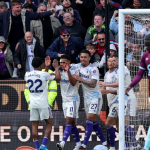
From the outset, Inter imposed themselves with the calm authority of a team accustomed to winning. Their pressing disrupted Lazio’s rhythm, forcing hurried decisions and limiting any sustained buildup. The breakthrough came early and, fittingly, through pressure rather than pure invention. A Dimarco corner caused problems at the near post, and Marušić, under duress, headed into his own net to hand Inter the lead.
That opening goal set the tone. Inter continued to press high, and Lazio’s defensive uncertainty became increasingly apparent. The second goal, arriving in the 35th minute, effectively ended the contest. Dumfries capitalized on a lapse from Nuno Tavares, winning possession and delivering a composed pass for Lautaro Martínez to finish from close range.
At 2–0 before halftime, the balance of belief had shifted decisively. Lazio, carrying the burden of needing victory for European qualification, looked increasingly constrained by the occasion. Their attempts to respond were sporadic, lacking both cohesion and conviction.
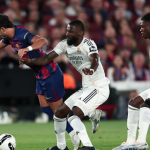
The second half offered moments of resistance but little sustained threat. Lazio created half-chances—most notably a near miss from Tijjani Noslin—but Inter’s defensive structure remained intact. The Nerazzurri, by contrast, managed the game with maturity, controlling possession and tempo while remaining dangerous on the counterattack.
As the match wore on, frustration crept in. Tackles became sharper, tempers flared briefly, and a series of late bookings reflected a game drifting toward its inevitable conclusion. Yet Inter remained composed, seeing out the final stages with minimal disruption to confirm a comfortable victory.
A Brief Statistical Snapshot
The numbers reinforced the visual impression of control. Inter dominated possession with close to 58 percent and registered more attempts, 11 to Lazio’s 8, while also leading in shots on target.
Their passing accuracy and territorial dominance ensured Lazio rarely built sustained pressure, underlining the structural superiority of the Nerazzurri across the match.
Atmosphere, Reaction and Emotional Undertones
The Stadio Olimpico provided a fitting backdrop, with both sets of supporters delivering elaborate choreographies that reflected the stakes. Lazio fans, returning after a period of protest, sought to inspire a turnaround, while Inter supporters embraced the moment as a potential chapter in a historic season.
At full-time, the contrast in mood was stark. Inter’s players celebrated a campaign-defining achievement, emphasizing resilience and collective strength following the disappointments of the previous year. The sense of vindication was clear: this was a team that had rebuilt, adapted and ultimately dominated domestically.
For Lazio, the reaction was one of quiet resignation. There was no dramatic collapse, but rather a gradual fading, a sense that the decisive moments had already passed them by long before the final whistle.
Conclusion: The Meaning of a Double
The result carried significant implications. Inter’s victory secured their tenth Coppa Italia title and completed a domestic double, marking one of the most successful seasons in the club’s recent history. It also underscored the effectiveness of Cristian Chivu’s leadership, as his side translated tactical clarity into tangible success.
For Lazio, defeat meant more than the loss of a trophy. It eliminated their most direct pathway to European football, leaving broader questions about their season and direction unanswered.
In the end, the Coppa Italia final of 2026 will not be remembered for drama or unpredictability, but for certainty. Inter did not merely win—they asserted, controlled and concluded with authority. In Rome, on a night designed for spectacle, the message was unmistakable: this was Inter’s season, and the cup was simply its final confirmation.
- Soccer News Like
- Be the first of your friends!